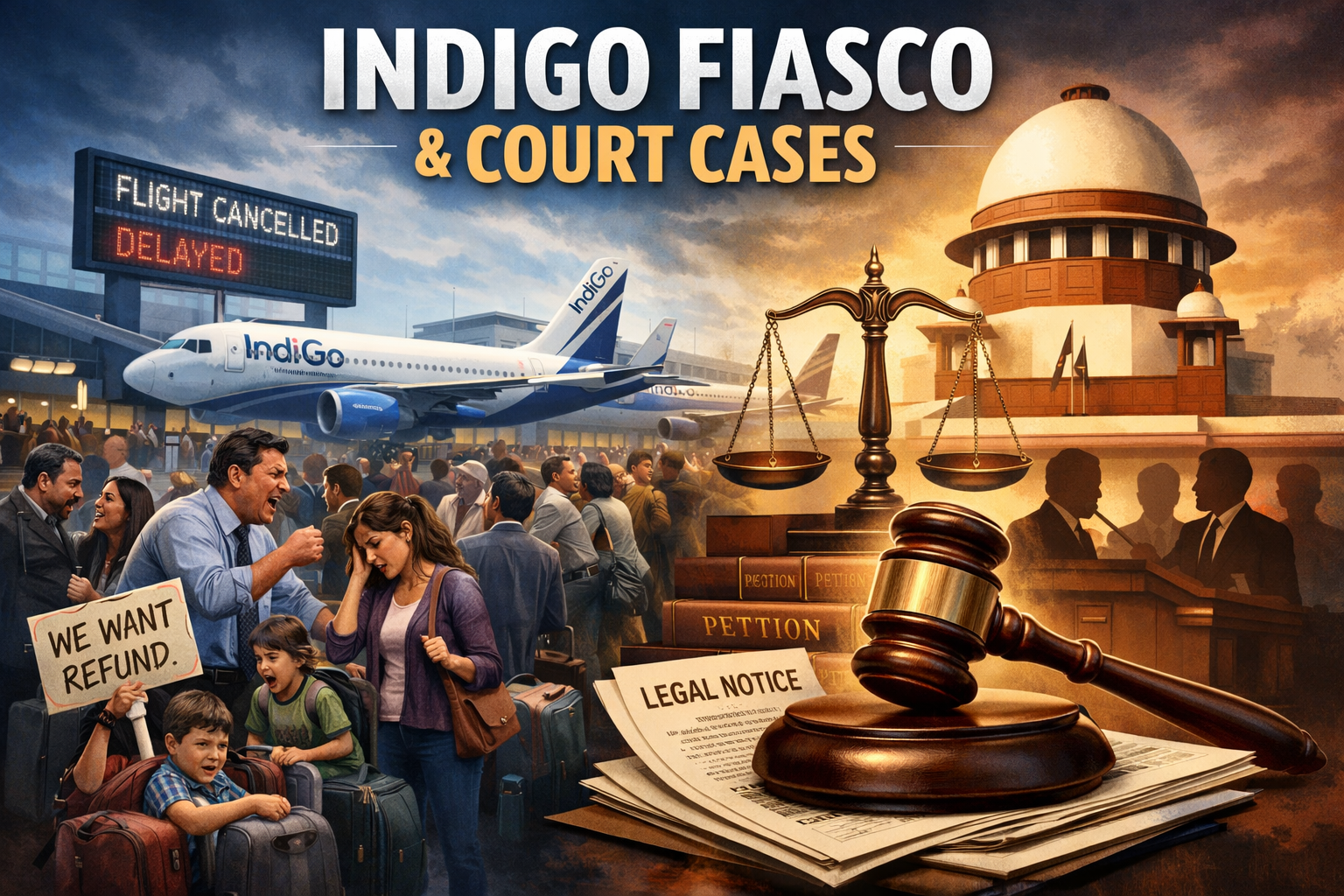
The first week of December 2025 has etched itself into the memory of Indian air travellers as a period of profound disruption and corporate failure. What began as isolated cancellations by IndiGo on December 2-3 spiralled into a full-blown national crisis by December 5th, with the airline cancelling a staggering 90% of its flights. The result wasn’t just an operational hiccup; it was a systemic collapse that stranded thousands, shattered travel plans, and exposed the frail underbelly of consumer protection in a monopolistic market.
A SCENE OF UTTER DISTRESS: THE IMAGES AND STORIES FROM AIRPORTS WERE HEARTBREAKING AND INFURIATING:
Passengers Taken Hostage: Travellers were left in limbo for hours with no information, no assistance, and eventually, no flights. With IndiGo offering no solutions, they were forced into a predatory secondary market, buying last-minute tickets on other airlines at exorbitant prices.
A Domino Effect of Missed Connections: The chaos cascaded. Flights to important domestic destinations and critical international connections were missed, causing not just inconvenience but significant financial loss and emotional trauma.
The Most Vulnerable, Hit the Hardest: Infants without adequate supplies, the elderly stranded without help, and persons with disabilities facing insurmountable hurdles as they bore the maximum brunt of IndiGo’s silence.
Financial Abandonment: Perhaps the most shocking reports were of passengers left with no money and nowhere to go, abandoned by the airline they had paid for a service.
THE ROOT CAUSE: A MONOPOLY’ RECKLESS GAMBLE
While IndiGo cloaked itself in silence, the prime reason for this debacle is an open secret. The Directorate General of Civil Aviation (DGCA) had issued new Flight Duty Time Limitation (FDTL) rules, set to become effective on November 1, 2025, mandating stricter rest hours for pilots and crew.
IndiGo, commanding over 65% of the domestic market, allegedly chose a path of dangerous brinkmanship. Instead of proactively hiring and training additional staff to comply with the new norms, it stretched the implementation to the last possible moment. The severe pilot and crew shortage that followed was not an unforeseen accident but a predictable outcome of this corporate strategy. Many analysts believe this chaos was a calculated move to arm-twist the regulators, using passenger suffering as a bargaining chip to dilute or delay the regulations.
A TOKEN GESTURE AMIDST SYSTEMIC FAILURE
IndiGo’s offered Rs. 10,000 travel vouchers to the “severely impacted” alongside refunds trying to appear like a band-aid on a gaping wound. The gesture, while a nominal admission of fault, is inadequate for the scale of loss incurred. Furthermore, reports of third-party travel portals making large deductions despite promises of full waivers added insult to injury, highlighting a broken accountability chain where the passenger is always the last link.
THE NEED FOR A STRONGER RESPONSE
This is a watershed moment. The government’s role should extend beyond a routine DGCA probe and a potential future penalty. There is a compelling case for the authorities to ensure that every single rupee spent by stranded passengers on alternative tickets, hotels, food, and transportation is reimbursed by IndiGo, along with compensation for the immense mental agony and hardship.
However, history tells us that systemic change often waits for bureaucratic cycles to conclude. This is where the power must shift to the people most affected: the passengers.
THE PATH FORWARD IS EMBRACING THE CLASS ACTION SUIT
In India, we are accustomed to fighting our battles alone. An individual filing a consumer complaint is often met with prolonged proceedings and a settlement that barely covers the legal fees. For a corporation like IndiGo, managing scattered individual cases is a manageable cost of doing business.
The real deterrent lies in collective action. A Class Action Suit forces a company to face its entire aggrieved consumer base as a single, powerful entity. The scale of liability becomes monumental, and the public relations damage severe, compelling not just the company but also the government to take immediate and serious notice.
For Consumers: The Consumer Protection Act, 2019 (Section 35) allows for class actions where numerous consumers have a common interest. The IndiGo fiasco is a textbook case.
The Legal Framework: While Section 245 of the Companies Act, 2013, is limited to shareholders and depositors, the foundational concept for civil matters lies in Order I Rule 8 of the Code of Civil Procedure (CPC). It allows a large group of people with a common grievance to sue through representatives, making it a potent tool for such scenarios.
A Call to Action
The December 2025 IndiGo crisis is more than a travel nightmare; it is a case study in corporate arrogance and consumer vulnerability. It underscores why we must move beyond helpless outrage.
If you were one of the thousands affected who were stranded, financially bled, or traumatised then your strongest recourse is to unite. Seek out legal forums, consumer rights groups, and fellow passengers. Explore the possibility of a Class Action Suit. It is through such collective legal courage that we can transform this fiasco from a mere news cycle into a precedent that forces corporations to respect the citizen, not just the balance sheet.
The skies should symbolize freedom, not helplessness. It’s time to demand accountability, not with pleas, but with the united power of the law.
LawExpalined.in is an initiative by Advocate Pankaj Yadav, who is a practicing advocate at Punjab & Haryana High Courts & Delhi High Court. LawExplained.in tries to focus on the matters that affect the common public at large. He can be reached at +91-97-1179-1179 or pankajyadav.legal@gmail.com